What Flowers to Give on Valentine’s Day Besides Roses
7 min read
Contents:
- Why Valentine’s Day Flowers Not Roses Deserve More Attention
- The Best Alternatives to Roses for Valentine’s Day
- Tulips: The Clean-Lined Classic
- Ranunculus: The Florist’s Secret Weapon
- Anemones: Drama Without the Thorns
- Peonies: Luxury in a Bloom
- Lisianthus: The Rose That Isn’t
- Chamomile and Wildflower Mixes: The Sustainable Statement
- Practical Tips for Buying Valentine’s Day Flowers
- A Note on Eco-Friendly Floral Choices
- Frequently Asked Questions
- What flowers mean love besides roses?
- What is the most long-lasting Valentine’s Day flower?
- Are there Valentine’s Day flowers that are locally grown in the US in February?
- What flowers should I avoid giving on Valentine’s Day?
- How much should I budget for Valentine’s Day flowers besides roses?
- Make the Choice That Lasts
Most people reaching for valentine’s day flowers not roses don’t realize they’re joining a long botanical tradition — roses didn’t even dominate Valentine’s Day gifting until the mid-20th century, when commercial greenhouse production made them cheap enough to mass-market. Before that, Victorians exchanged violets, primroses, and pansies, each carrying a precise emotional vocabulary. The rose’s monopoly on February 14th is, in botanical terms, a recent phenomenon.
That matters because the flower market hasn’t forgotten its history. Today, florists stock a remarkable range of blooms that are fresher, more distinctive, and often more affordable than a dozen red roses — which can cost $80–$150 at peak Valentine’s demand. Choosing something else isn’t settling. It’s showing you actually thought about it.
Why Valentine’s Day Flowers Not Roses Deserve More Attention
Roses are beautiful. No argument there. But their dominance creates two real problems: supply chain stress and emotional predictability. Every year, roughly 250 million roses are imported into the United States for Valentine’s Day, the vast majority flown in from Ecuador and Colombia. That carbon footprint is significant — an estimated 360,000 metric tons of CO₂ equivalent, according to lifecycle analyses of the cut flower trade.
Alternatives often travel shorter distances, last longer in the vase, and communicate something more personal. A florist who knows your recipient’s personality can match a flower to a feeling far more precisely than a color-coded rose ever could.
The Best Alternatives to Roses for Valentine’s Day
Tulips: The Clean-Lined Classic
Tulips are the second most popular cut flower in the US market, and for good reason. They’re structurally elegant, available in every color from cream to near-black, and typically priced at $1.50–$3.00 per stem — a fraction of rose cost in February. Red tulips carry a direct “declaration of love” meaning in the Victorian flower language known as floriography, making them a legitimate romantic substitute.
One practical advantage: tulips continue to grow after cutting, sometimes adding an inch or more in height as they arch gracefully in the vase. Place them in cool water in a cool room to extend vase life to 7–10 days. Avoid mixing them with daffodils in the same vase — daffodils release a sap toxic to tulips.
Ranunculus: The Florist’s Secret Weapon
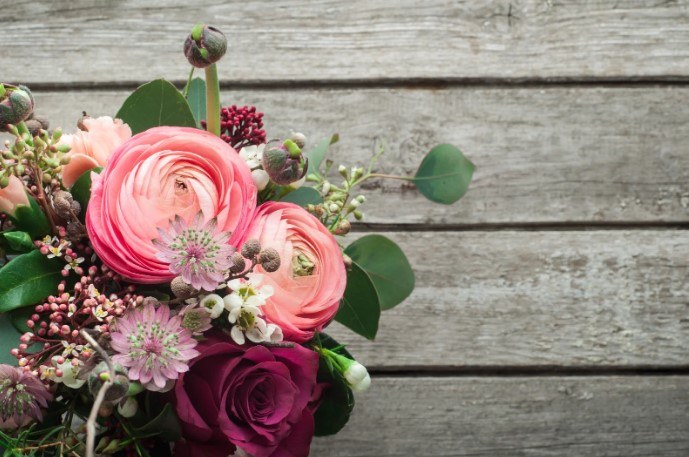
Ask most professional florists what they’d give their own partner and ranunculus comes up repeatedly. “Ranunculus has 130 to 150 petals per bloom — more than a standard garden rose — and it photographs beautifully,” says Dr. Mara Linden, Certified Master Gardener and floral design instructor at the Denver Botanic Gardens. “It’s the flower that makes bouquets look like they cost three times what they did.”
Ranunculus (Ranunculus asiaticus) comes in saturated pinks, corals, creams, and deep burgundies. A single stem runs $2.50–$4.00. Because they’re grown in California, Oregon, and Washington from fall through spring, buying domestic ranunculus in February is entirely feasible — a genuine eco-friendly advantage over imported roses.
Anemones: Drama Without the Thorns
The poppy anemone (Anemone coronaria) is one of the most visually striking flowers available in winter. Its dark, almost-black center surrounded by jewel-bright petals — scarlet, violet, white, or magenta — creates instant visual contrast. In Greek mythology, anemones sprang from the tears of Aphrodite, the goddess of love, giving them an unimpeachable romantic pedigree.
Vase life runs 7–10 days with proper conditioning. They’re best purchased as buds and allowed to open at home, which makes them a good choice for delivery a day before Valentine’s Day. Expect to pay $2.00–$3.50 per stem from most florists.
Peonies: Luxury in a Bloom
Peonies are February’s most sought-after off-season flower. They’re not naturally in season in the US until late April through June, so February peonies are typically imported from Chile or New Zealand — worth acknowledging if sustainability is a priority. That said, a single peony bloom is genuinely lush: up to 5 inches across when fully open, with a light fragrance and a vase life of 5–7 days.
Pink peonies specifically carry associations with romance, prosperity, and good fortune. They’re a strong choice for a relationship milestone — an anniversary falling near Valentine’s Day, or a first significant gift. Budget $5.00–$9.00 per stem; a five-stem arrangement makes a memorable statement.
Lisianthus: The Rose That Isn’t
Lisianthus (Eustoma grandiflorum) is frequently mistaken for a rose or peony at first glance. Its ruffled, layered petals come in white, lavender, deep purple, and bicolor varieties. It’s entirely North American in origin — native to the southern US and Mexico — and is commercially grown in California and Florida, making it one of the most genuinely local options available in February.
Lisianthus lasts an impressive 14–21 days in the vase, outlasting roses by nearly two weeks. For recipients who appreciate longevity over extravagance, it’s a practical and beautiful choice. Cost ranges from $2.00–$4.00 per stem.
Chamomile and Wildflower Mixes: The Sustainable Statement
For the eco-conscious gift, a locally sourced wildflower or dried flower arrangement sidesteps the carbon-intensive international supply chain entirely. Dried flowers — strawflowers, statice, amaranth, bunny tail grass — are experiencing a genuine design renaissance and can last months or years rather than days. Many independent florists now source dried arrangements from domestic farms certified by the Rainforest Alliance or VeriFlora.
Fresh local mixed bouquets are available through farm-direct services like Farmgirl Flowers or FiftyFlowers, which ship direct from US farms. Prices start around $35–$55 for a substantial arrangement — competitive with, or cheaper than, imported roses.
Practical Tips for Buying Valentine’s Day Flowers
- Order at least 5–7 days in advance. Valentine’s Day is the single busiest floral holiday in the US, surpassing even Mother’s Day in same-day sales. Local florists typically cut off custom orders by February 10th or 11th.
- Ask for “locally grown” or “domestic” flowers. Most florists can source at least some blooms from US farms when asked directly, especially tulips, lisianthus, and ranunculus in late winter.
- Condition flowers immediately. Recut stems at a 45-degree angle under water, remove all foliage below the waterline, and use the provided flower food. This alone can add 3–5 days to vase life.
- Consider bloom stage at delivery. Tight buds last longer; open blooms are more dramatic. For delivery the day before Valentine’s, request tighter buds. For same-day presentation, ask for partially open flowers.
- Match color temperature to the relationship. Warm colors (coral, orange-red, peach) signal excitement and passion. Cool colors (lavender, white, blue-violet) communicate admiration, elegance, and calm devotion. Neither is more “romantic” — they’re just different registers.
A Note on Eco-Friendly Floral Choices
The US floral industry is slowly shifting toward greater sustainability. Look for the Veriflora or Rainforest Alliance certification on flower packaging — these standards address pesticide use, water management, and worker welfare on farms. Domestic flowers always carry a lower transport footprint than imports, and seasonal choices align with what’s naturally available rather than forcing out-of-season production.
Potted plants — a cyclamen, a miniature gardenia, a forced hyacinth bulb — are the most sustainable gift of all. They produce no cut-flower waste, can be replanted outdoors (cyclamen and hyacinths are hardy to USDA Zone 5–7), and last indefinitely with basic care.
Frequently Asked Questions
What flowers mean love besides roses?
Red tulips symbolize a declaration of love in traditional floriography. Peonies represent romance and prosperity. Anemones, in Greek tradition, are associated directly with Aphrodite. Gardenias express secret love. Any of these make a meaningful romantic gift on Valentine’s Day.
What is the most long-lasting Valentine’s Day flower?
Lisianthus has the longest vase life of common Valentine’s flowers, lasting 14–21 days with proper care. Alstroemeria (Peruvian lily) is a close second at 14 days. Both significantly outlast standard cut roses, which average 7–10 days.
Are there Valentine’s Day flowers that are locally grown in the US in February?
Yes. Ranunculus, lisianthus, and some tulip varieties are commercially grown in California, Oregon, and Washington and available domestically in February. Ask your florist specifically for domestic sourcing — many can accommodate the request with advance notice.
What flowers should I avoid giving on Valentine’s Day?
Yellow carnations traditionally signal rejection or disappointment in floriography. Striped carnations have historically meant refusal. While most people don’t know these associations, florists are generally aware of them. When in doubt, ask your florist about a bloom’s cultural meaning before including it in a romantic arrangement.
How much should I budget for Valentine’s Day flowers besides roses?
A well-composed arrangement of ranunculus, tulips, or anemones from a local florist typically runs $45–$85, compared to $80–$150 for a dozen imported roses in peak February demand. Farm-direct services offer bouquets starting around $35. A single showstopper stem — a large peony or dahlia — plus greenery can make a striking minimalist gift for under $20.
Make the Choice That Lasts
February 14th will come and go in 24 hours. The flowers you choose will still be on the table three days later, and the thought behind them will be remembered longer than that. A bloom your recipient has never received before, chosen because it suited their personality or matched a shared memory, carries more weight than the default dozen. Talk to an independent florist — not a grocery store — describe the person you’re buying for, and let someone with horticultural knowledge help you choose. That conversation, and what comes out of it, is the real gift.