Best Flowers to Bring to a Baby Shower (By Mood, Budget & Style)
7 min read
Contents:
- Why Flower Choice Matters at a Baby Shower
- The Best Baby Shower Flowers, Ranked by Popularity and Practicality
- Garden Roses — The Classic Choice
- Peonies — Lush and Symbolic
- Sweet Peas — Delicate and Cottage-Garden Charming
- Tulips — Clean, Graphic, and Affordable
- Chamomile and Daisy-Type Flowers — Whimsical Filler
- Ranunculus — The Florist’s Secret Weapon
- Baby Shower Flowers to Avoid
- Budget Breakdown: Baby Shower Flower Costs
- DIY Baby Shower Flower Arrangement Tips
- The Rule of Odd Numbers
- Build in Layers: Focal, Secondary, Filler
- Condition Your Flowers First
- Low Arrangements Are More Practical
- Frequently Asked Questions About Baby Shower Flowers
- What flowers are traditional for a baby shower?
- Are lilies safe to bring to a baby shower?
- How far in advance should I order baby shower flowers?
- What is the best color palette for baby shower flowers?
- Can I bring potted plants instead of cut flowers?
- Putting It All Together: Building Your Baby Shower Bouquet
What does a flower say that a gift card simply cannot? At a baby shower, the answer matters more than you might expect. Flowers set the tone of the room, reflect care for the mother-to-be, and create the kind of atmosphere that photographs remember for decades. Choosing the right baby shower flowers is a small decision with an outsized emotional impact.
The best baby shower flowers are soft, fragrant, and visually gentle. Top picks include white or blush garden roses, peonies, sweet peas, tulips, and chamomile. Avoid strongly scented flowers like lilies and stargazers — they can overwhelm a pregnant guest of honor. A mixed bouquet in pastels typically costs $30–$75 from a florist, or $15–$35 if you arrange it yourself.
Why Flower Choice Matters at a Baby Shower
Baby showers are intimate gatherings. The guest of honor is often in her second or third trimester, when heightened smell sensitivity is common. Research published in the journal Chemical Senses confirms that olfactory sensitivity increases significantly during pregnancy, particularly in the first and second trimesters. Even in the third trimester, many women report strong reactions to floral perfumes.
This means fragrance is your first filter. Beyond scent, symbolism plays a real role. Flowers carry cultural meanings that guests and the mother-to-be often know intuitively — even if they couldn’t name the source. A thoughtfully chosen arrangement communicates attention and intention.
Finally, there is the visual harmony of the shower itself. Baby shower flowers that echo the party’s color palette tie the room together without any extra effort.
The Best Baby Shower Flowers, Ranked by Popularity and Practicality
1. Garden Roses — The Classic Choice
Garden roses, particularly David Austin varieties, are the gold standard for baby showers. Their cupped, multi-petaled blooms feel lush without being showy. Blush pink, ivory, and soft peach tones are perennial favorites. A single stem of a garden rose like ‘Juliet’ or ‘Patience’ can anchor an entire arrangement.
Scent level: mild to moderate. Most garden roses sold by florists have been bred for longevity, which means their fragrance is often subtler than heirloom varieties. Cost: roughly $3–$6 per stem from a floral wholesaler, or $8–$14 per stem from a retail florist.
2. Peonies — Lush and Symbolic
Peonies bloom from late April through June, making them a seasonal treasure. Their fluffy, layered petals are synonymous with femininity and new beginnings across many cultures. In traditional Chinese symbolism, peonies represent good fortune and prosperity — a meaning that translates beautifully to a new arrival.
Choose peonies that are still in the “marshmallow” stage — tightly closed but beginning to soften — so they open fully during the shower. Fully open peonies drop petals quickly. Cost: $5–$9 per stem in season; out-of-season imports can reach $12–$18 per stem.
3. Sweet Peas — Delicate and Cottage-Garden Charming
Sweet peas are underused and underappreciated. Their ruffled, butterfly-like blooms come in lavender, pink, white, and coral, and they add an airy, garden-party quality to any arrangement. Scent is light and pleasant — rarely overwhelming. Sweet peas are a strong DIY option if you’re growing your own; they thrive in USDA Hardiness Zones 3–8 as cool-season annuals.
At florists, expect to pay $1.50–$3 per stem. A full bunch of 20 stems typically costs $25–$40.
4. Tulips — Clean, Graphic, and Affordable
Tulips are the practical backbone of budget-conscious baby shower flowers. They’re widely available year-round from US wholesalers, easy to arrange (they do most of the work themselves), and unscented. White, blush, and soft lavender tulips are particularly versatile.
One design tip: let tulips curve naturally in the vase rather than forcing them upright. Their graceful lean gives arrangements a relaxed, organic quality. Cost: $1–$2 per stem wholesale; $3–$5 per stem retail.
5. Chamomile and Daisy-Type Flowers — Whimsical Filler
Single-stem chamomile, feverfew, and small spray daisies add a wildflower, storybook quality to arrangements. They soften the formality of roses and peonies and add visual texture without competing. Chamomile also carries a gentle, calming herbal scent that most people find soothing rather than overpowering.
These work especially well in mason jar arrangements — a DIY format that costs as little as $10–$20 per jar to assemble at home.
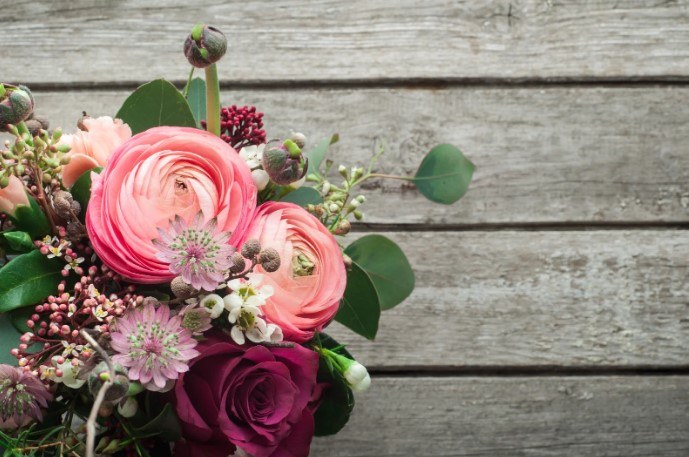
6. Ranunculus — The Florist’s Secret Weapon
If you want the layered luxury of a peony with more year-round availability and a lower price point, ranunculus is your answer. Available from January through May in most US markets, ranunculus comes in a wide range of pastels. Each bloom is tightly layered with dozens of paper-thin petals. Fragrance: virtually none, making them pregnancy-safe.
Cost: $2–$4 per stem from a wholesaler; $5–$9 per stem retail.
Baby Shower Flowers to Avoid
Not every beautiful flower belongs at a baby shower. Strong fragrance is the primary concern, but toxicity matters too — especially for future households with curious toddlers.
- Oriental and Stargazer Lilies: Intensely fragrant and highly toxic to cats. Skip them entirely if the mother-to-be has pets.
- Hyacinths: Beautiful but overwhelmingly sweet. Even a single stem can scent an entire room.
- Tuberose: One of the most intensely fragrant flowers in existence. Not appropriate for enclosed shower spaces.
- Chrysanthemums (in some cultures): Associated with funerals in parts of Eastern Europe, China, and Japan. Know your guest.
- Foxglove: Stunning but toxic if ingested — a concern once the baby is mobile.
Budget Breakdown: Baby Shower Flower Costs
Understanding what you’ll spend helps you plan a beautiful display without stress.
- Budget tier ($15–$35): A DIY mason jar arrangement using tulips, chamomile, and grocery-store roses. Buy from Trader Joe’s, Whole Foods, or a local farmers’ market.
- Mid-range tier ($40–$75): A florist-arranged bouquet in a wrapped presentation, featuring garden roses, ranunculus, and eucalyptus. Order 3–5 days in advance.
- Premium tier ($80–$150+): A full floral centerpiece or a designer arrangement with seasonal peonies, sweet peas, and garden roses from a specialty florist.
- DIY table centerpiece ($20–$50 per vase): Source stems from a local wholesale flower market (many are open to the public on weekend mornings) and arrange in low, wide-mouthed vases.
DIY Baby Shower Flower Arrangement Tips
For DIY enthusiasts, assembling your own arrangement is both rewarding and economical. A few mechanics make all the difference.
The Rule of Odd Numbers
Odd-numbered groupings — 3, 5, or 7 stems of each variety — look more natural than even numbers. The eye finds them more pleasing because they don’t create a forced symmetry.
Build in Layers: Focal, Secondary, Filler
Start with your focal flower (roses or peonies), then add secondary blooms (ranunculus or tulips), and finish with fillers (chamomile, eucalyptus, or fern fronds). Work from the outside in, rotating the vase as you go.
Condition Your Flowers First
Cut stems at a 45-degree angle and place them in clean, room-temperature water for at least 4 hours before arranging. Add a packet of flower food — the sugars and biocides in commercial flower food extend vase life by 2–3 days compared to plain water.
Low Arrangements Are More Practical
At a party, guests need to see across tables. Keep centerpiece arrangements under 12 inches tall, or go dramatically tall (over 24 inches) so sightlines pass below the blooms. The awkward middle zone — 14 to 22 inches — blocks conversation.
Frequently Asked Questions About Baby Shower Flowers
What flowers are traditional for a baby shower?
Roses, daisies, and tulips are the most traditional baby shower flowers in the US. Soft pink and white are the classic color choices, though modern showers often use lavender, sage green, and neutral tones. There are no rigid rules — the mother-to-be’s preferences always take priority.
Are lilies safe to bring to a baby shower?
Oriental lilies and stargazer lilies are not recommended for baby showers. Their intense fragrance can cause nausea or headaches in pregnant women. Additionally, all true lilies (Lilium species) are fatally toxic to cats, which is a concern if the flower arrangement will be taken home by the guest of honor.
How far in advance should I order baby shower flowers?
Order from a florist at least 5–7 days in advance for standard arrangements, and 2–3 weeks ahead for specialty or seasonal flowers like peonies or sweet peas. If buying from a wholesale market or grocery store, purchase 2–3 days before the event to allow conditioning time.
What is the best color palette for baby shower flowers?
Blush pink, ivory, soft lavender, and sage green are the most popular contemporary baby shower palettes in the US. For gender-neutral showers, white and green arrangements with textural foliage — eucalyptus, fern, and dusty miller — are consistently elegant and widely appreciated.
Can I bring potted plants instead of cut flowers?
Absolutely. Potted plants like peace lilies (non-toxic varieties), African violets, or small herb gardens make thoughtful gifts because they last far longer than cut arrangements. Avoid potted Easter lilies, as they are toxic to cats. Succulents in decorative pots are another low-maintenance option that new parents tend to appreciate.
Putting It All Together: Building Your Baby Shower Bouquet
The best baby shower flowers combine visual softness, minimal fragrance, and a color story that complements the celebration’s mood. Start with a focal flower — garden roses or ranunculus are almost universally appropriate. Layer in secondary blooms for texture, and finish with a filler that ties the palette together. Keep your budget in mind from the start: a $30 DIY arrangement assembled with care will always outshine a $75 florist bouquet chosen in haste.
If you’re a hands-on DIY arranger, your best investment is a trip to a local wholesale flower market. You’ll find fresher stems at a fraction of retail price, and the experience of choosing each stem yourself adds something no delivery service can replicate. Bring a cooler, arrive early, and plan to spend 30–45 minutes exploring before you commit to a palette.
The mother-to-be will notice the thought behind the flowers long after the petals have fallen.