Flowers to Send When a Friend Gets Engaged
7 min read
Contents:
- Why Engagement Flowers Are Different from Other Floral Gifts
- The Best Engagement Flowers by Type
- Peonies: The Crowd Favorite for Good Reason
- Garden Roses: Softer and More Sculptural
- Ranunculus: The Underrated Choice
- White Tulips and Anemones: Modern and Clean
- Champagne Chrysanthemums and Dahlias: Fall and Winter Options
- Regional Considerations: Flower Availability Varies More Than You’d Think
- How to Build a DIY Engagement Bouquet
- Common Mistakes to Avoid
- Practical Tips for Ordering Online
- Frequently Asked Questions
- What are the best engagement flowers to send a friend?
- Is it appropriate to send flowers when someone gets engaged?
- How much should I spend on engagement flowers for a friend?
- What flower colors are best for an engagement gift?
- Can I send engagement flowers if I can’t attend the celebration?
- Plan Your Arrangement Around Your Friend, Not a Formula
Most people assume red roses are the obvious choice for an engagement. They’re romantic, they’re classic, and they’re easy to find at any florist. But here’s the thing: red roses are a symbol of romantic love between partners — not a celebration of a milestone shared with a friend. Sending engagement flowers that actually resonate with the moment takes a little more thought, and the payoff is a bouquet that feels genuinely personal rather than reflexively purchased.
This guide breaks down exactly which flowers work best, why they work, and how to put together something memorable — whether you’re ordering from a local florist or assembling an arrangement yourself.
Why Engagement Flowers Are Different from Other Floral Gifts
Flowers given for an engagement occupy a specific emotional space. They’re celebratory, yes — but they also carry the weight of a life-changing moment. The best choices lean into joy, new beginnings, and the particular warmth of close friendship. That’s a different brief than a birthday bouquet or a sympathy arrangement.
Color temperature matters here. Warm whites, soft peaches, blush pinks, and champagne tones tend to photograph beautifully and feel appropriate to the occasion — which matters, since your friend will almost certainly be taking a lot of photos in the next few weeks. Avoid anything too somber or overly saturated in primary colors.
Symbolism also plays a role, though it doesn’t have to be the centerpiece of your decision. If your friend is the type to research flower meanings, choosing intentionally adds a layer of thoughtfulness they’ll appreciate. If they’re not, a beautiful arrangement speaks for itself.
The Best Engagement Flowers by Type
Peonies: The Crowd Favorite for Good Reason
Peonies are arguably the most popular engagement flowers in the US right now, and the reasons are practical as well as symbolic. They bloom in lush, layered clusters that feel genuinely celebratory, they come in shades ranging from ivory to deep blush, and they’re widely associated with good fortune and happy marriage in both Western and Eastern floral traditions. A bouquet of 12 to 15 stems makes a full, impressive arrangement without looking overdone. Pricing typically runs $65–$120 for a quality florist arrangement, depending on season and location.
Garden Roses: Softer and More Sculptural
Garden roses — varieties like David Austin, Juliet, or Keira — have a cupped, old-fashioned shape that reads as romantic without veering into Valentine’s Day territory. They’re often more fragrant than standard hybrid tea roses, and their soft peach and apricot varieties photograph in a way that feels both warm and sophisticated. For DIY arrangements, garden roses pair naturally with eucalyptus, ranunculus, and sweet peas.
Ranunculus: The Underrated Choice
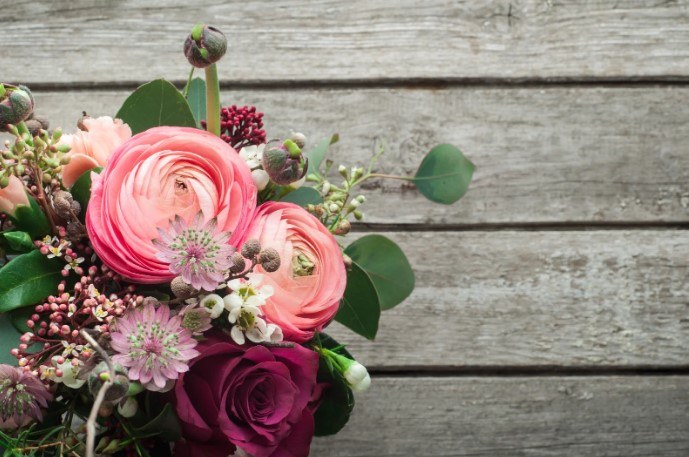
Ranunculus looks like a rose crossed with a peony, but it’s often more affordable and available year-round in most US markets. Its tightly layered petals in creamy white, pale pink, or coral make it ideal for mixed bouquets. A bundle of 10 stems typically costs $15–$25 at a wholesale flower market or well-stocked grocery store — making it excellent for DIY builders working on a budget.
White Tulips and Anemones: Modern and Clean
For friends with a more minimal or contemporary aesthetic, white tulips and white anemones with their dark centers offer a graphic, modern look. These pair well with black-eye’d ranunculus or dusty miller for contrast. This style tends to be especially popular on the West Coast, where clean lines and muted palettes often dominate interior and event design.
Champagne Chrysanthemums and Dahlias: Fall and Winter Options
Engagements don’t only happen in spring. Dahlias, available August through October, and chrysanthemums, which carry through winter, are excellent seasonal choices. Café au lait dahlias in particular have become a staple of upscale floral design — their muted, dusty terracotta tone pairs naturally with dried pampas grass or preserved eucalyptus for a longer-lasting arrangement.
Regional Considerations: Flower Availability Varies More Than You’d Think
Flower availability across the US isn’t uniform, and this affects both your options and your pricing. In the Northeast, florists in cities like Boston and New York have access to a wide international import market year-round, so peonies and garden roses are often available even in November. In the South — particularly in states like Georgia and the Carolinas — local growers supply a strong market for zinnias, dahlias, and native wildflowers, which can make locally sourced bouquets both fresher and more affordable. On the West Coast, California’s Central Valley grows a significant portion of the country’s domestic flower supply, so residents in Los Angeles or San Francisco often have access to premium stem quality at lower prices than national averages.
If you’re ordering online for delivery to another city, research whether the service uses local florists or ships arrangements in a box. Box-shipped flowers require 24–48 hours of conditioning in water before they look their best — worth noting if you’re timing your gift for the day of the announcement.
How to Build a DIY Engagement Bouquet
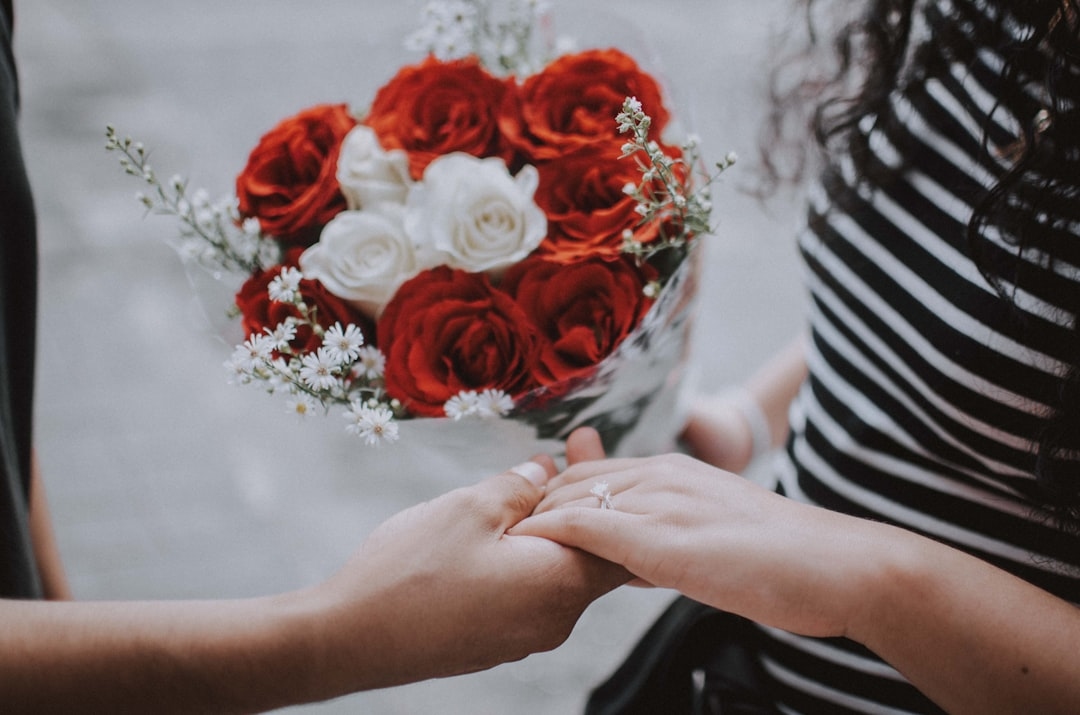
For hands-on gift-givers, assembling your own arrangement costs roughly 30–50% less than buying pre-made and allows for full creative control. Here’s a reliable structure:
- Choose a focal flower (peonies, garden roses, or dahlias) — 5 to 7 stems
- Add a secondary bloom (ranunculus or anemones) — 5 to 8 stems
- Include a filler flower (sweet peas, wax flower, or baby’s breath) — 3 to 5 stems
- Add greenery (eucalyptus, Italian ruscus, or fern) — 4 to 6 stems
- Wrap with kraft paper and ribbon, keeping the stems in water until you’re ready to deliver
Condition all stems by cutting them at a 45-degree angle under running water and placing them in a clean vase with flower food for at least 2 hours before arranging.
Common Mistakes to Avoid
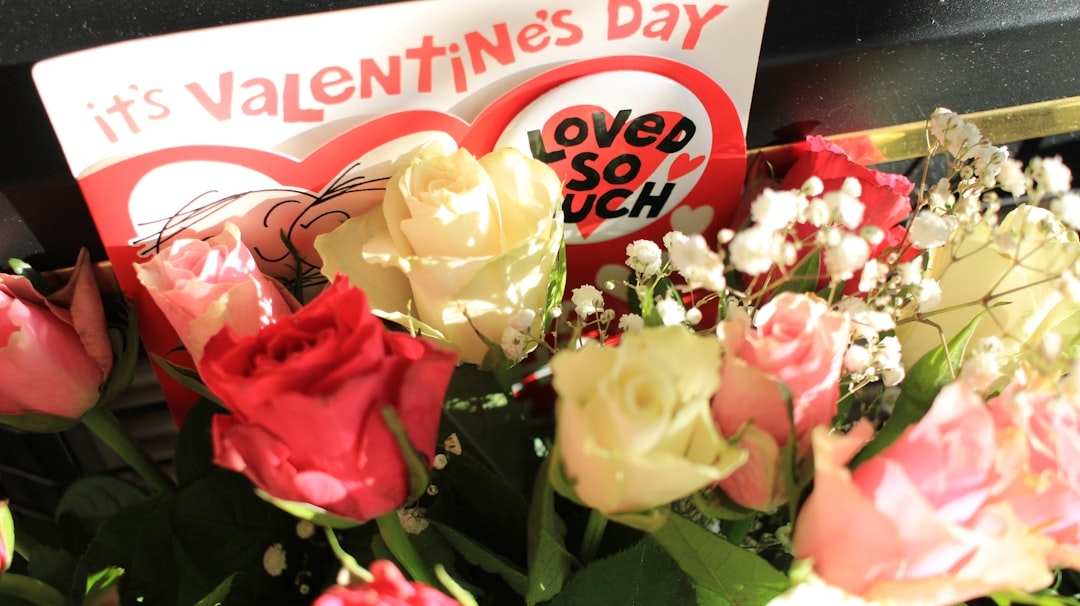
- Sending red roses: They read as romantic rather than celebratory — save them for the couple’s own exchanges.
- Ignoring season: Out-of-season flowers cost significantly more and may arrive with shorter vase life. A peony sent in December will cost twice what it does in May.
- Forgetting a card: A bouquet without a personal note feels incomplete for a milestone this significant. Handwrite it if you can.
- Over-scenting the arrangement: If your friend has a small apartment or is sensitive to fragrance, a heavily scented bouquet can be overwhelming. Opt for mildly fragrant varieties like ranunculus or tulips.
- Ordering too late: Most online florists need 2–3 business days for standard delivery, and same-day options often limit your choices significantly.
Practical Tips for Ordering Online
If you’re not local or prefer the convenience of delivery, a few guidelines keep quality high. Look for services that list the specific varieties in their arrangements rather than just color palette — vague descriptions like “pink bouquet” often signal filler-heavy designs. Budgeting $75–$150 for a delivered arrangement puts you in range for quality blooms with reasonable longevity (typically 5–10 days with proper care). Add a vase if the service offers one; most people don’t have a spare on hand for a surprise gift.
Frequently Asked Questions
What are the best engagement flowers to send a friend?
Peonies, garden roses, and ranunculus are the top choices for engagement flowers. They’re celebratory in tone, available in soft blush and champagne tones, and carry associations with joy and new beginnings rather than strictly romantic love.
Is it appropriate to send flowers when someone gets engaged?
Yes. Flowers are a widely accepted and appreciated way to mark an engagement. They’re especially meaningful when sent quickly — within the first day or two of the announcement — while excitement is at its peak.
How much should I spend on engagement flowers for a friend?
For a friend, $60–$100 is a thoughtful and appropriate range for a florist-arranged bouquet. DIY arrangements using market-sourced stems can achieve a similar result for $30–$50, depending on your local availability.
What flower colors are best for an engagement gift?
Blush pink, soft white, peach, and champagne tones work best. They photograph well, feel festive without being overwhelming, and complement most home décor and event aesthetics.
Can I send engagement flowers if I can’t attend the celebration?
Absolutely. Sending engagement flowers when you’re unable to be present is especially meaningful — it shows you took the time to mark the moment even from a distance. Include a handwritten card for maximum impact.
Plan Your Arrangement Around Your Friend, Not a Formula
The best engagement flowers aren’t determined by a rulebook — they’re shaped by who’s receiving them. A friend who decorates with dried botanicals and linen textiles will love a café au lait dahlia bouquet with pampas grass. A friend who loves bright, maximalist color might prefer a lush garden-style mix with coral charm peonies and hot pink ranunculus. The more specific you get, the more the bouquet becomes a reflection of your friendship rather than a generic gesture. Start with the person, then build the bouquet outward from there.