What Flowers to Bring to a Potluck Instead of Food
7 min read
Contents:
- Why Potluck Flowers Work Better Than You Think
- Choosing the Right Potluck Flowers for the Occasion
- Seasonal Choices That Actually Thrive
- Long-Lasting Varieties That Travel Well
- Potluck Flowers vs. Hostess Gift Flowers: Know the Difference
- How to Arrange Potluck Flowers Like a Pro
- The Grid Method for Beginners
- Color Pairing That Actually Works
- Common Mistakes to Avoid
- Budget-Smart Options for Every Price Point
- Frequently Asked Questions About Potluck Flowers
- What are the best flowers to bring to a potluck?
- Should potluck flowers be already arranged when you arrive?
- How much should I spend on flowers for a potluck?
- Are there flowers I should avoid bringing to a potluck?
- Can I bring flowers from my own garden to a potluck?
- Make Your Next Potluck Contribution Unforgettable
You’re standing in your garden on a Saturday morning, sign-up sheet deadline looming, and the dessert column is already full. Sound familiar? Bringing potluck flowers instead of food is not just a gracious workaround — it’s often the most memorable contribution at the table. A well-chosen arrangement becomes the centerpiece everyone photographs, the gift the host keeps for a week after the party, and the move that quietly marks you as someone who really knows their stuff.
For gardeners who already grow their own blooms, this is your moment. You don’t need a florist’s budget. You need the right flowers, the right presentation, and a little strategic thinking.
Why Potluck Flowers Work Better Than You Think
Potluck culture is built around contribution — showing up with something that feeds the group, literally or figuratively. Flowers feed the atmosphere. Studies on environmental psychology consistently show that fresh flowers in a shared space reduce stress and increase positive social interaction. At a gathering where the dining table is already crowded with casseroles and pasta salads, a 12-inch-tall arrangement placed on the entry table or kitchen island doesn’t compete — it elevates.
Hosts almost universally appreciate flowers because food contributions require coordination (refrigerator space, serving dishes, dietary accommodations), while flowers require none of that. You hand them over, they go straight into a vase, and everyone wins.
Choosing the Right Potluck Flowers for the Occasion
Not every flower works in every context. A tight bridal-white arrangement reads differently than a loose, wildflower-style bouquet bursting with color. Before you cut or shop, think about three things: the season, the setting, and the host’s aesthetic.
Seasonal Choices That Actually Thrive
Seasonality isn’t just a trend buzzword — it determines longevity. Flowers cut at their seasonal peak last 3–7 days longer than off-season blooms. Here’s a quick breakdown by US season:
- Spring: Peonies, ranunculus, tulips, lilacs. Peonies are the crowd favorite — one stem can fill a third of a small vase on its own.
- Summer: Sunflowers, zinnias, dahlias, lisianthus. Zinnias from your own garden are essentially free and photograph beautifully.
- Fall: Marigolds, celosias, rudbeckia, ornamental kale. The warm palette feels intentional at harvest-themed gatherings.
- Winter: Amaryllis, paperwhites, evergreen branches, hellebores. A single amaryllis stem in a bud vase is dramatic and costs under $5 at most grocery stores.
Long-Lasting Varieties That Travel Well
If you’re driving more than 20 minutes, you need flowers that won’t wilt in the car. Chrysanthemums, alstroemeria, and carnations are underrated workhorses — each lasts 10–14 days in water and tolerates temperature fluctuation better than roses or hydrangeas. Dahlias look spectacular but need water within two hours of cutting, so keep a small jar of water in the car if you’re bringing homegrown stems.
Potluck Flowers vs. Hostess Gift Flowers: Know the Difference
This is where many people get confused — and the distinction matters. A hostess gift is personal. It’s typically wrapped, often accompanied by a card, and given privately at the door. Potluck flowers are a contribution to the shared experience. They’re meant to be displayed communally, usually unwrapped, already arranged, and ready to place.
That means you should arrive with your arrangement already in its vessel — a mason jar, a ceramic pitcher, or a simple glass vase — so the host doesn’t have to scramble for a container mid-party. Pre-arranging at home takes 15 minutes and removes all friction from the handoff.
How to Arrange Potluck Flowers Like a Pro
You don’t need formal training, but a few structural principles make a huge difference. The classic ratio is 1.5:1 — your arrangement should be roughly 1.5 times the height of your vessel. For a 6-inch mason jar, aim for 9 inches of flower height above the rim.
The Grid Method for Beginners
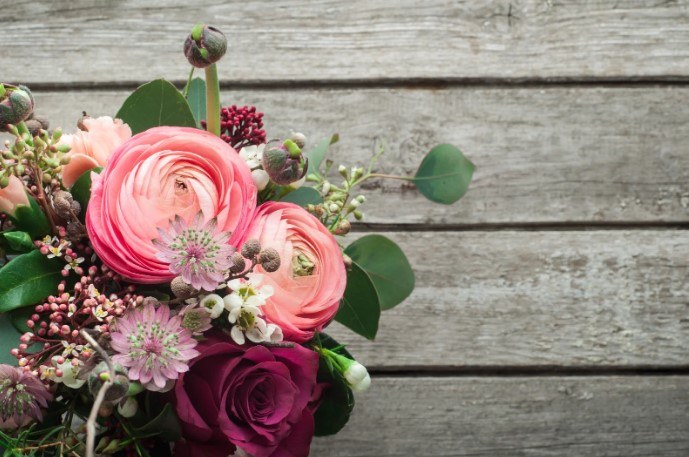
Tape a grid of 1-inch squares across the mouth of your vase using floral tape or regular clear tape. This grid holds stems in place without foam, keeps the arrangement from collapsing during transport, and lets you control spacing precisely. Use 3–5 stem varieties: one dominant flower (like a sunflower or peony), one secondary flower (like alstroemeria), and one filler (like baby’s breath, eucalyptus, or even garden herbs like mint or oregano).
Color Pairing That Actually Works
Analogous color schemes — colors that sit next to each other on the color wheel — are the safest bet for a mixed-crowd gathering. Think coral + peach + yellow, or purple + blue + white. They read as cohesive without being matched-to-the-tablecloth obvious. Avoid red-and-green combinations outside of December; they can accidentally read as Christmas regardless of the occasion.
🌿 What the Pros Know: Professional florists condition their flowers for 8–12 hours before arranging. Cut stems at a 45-degree angle under running water, strip all leaves below the waterline, and let the flowers drink in a cool, dark space overnight. This simple step extends vase life by up to 40% — and it’s the single biggest difference between a bouquet that looks great at the party and one that droops by dessert.
Common Mistakes to Avoid
- Bringing flowers still in grocery store wrap. Cellophane and rubber bands signal last-minute. Take five minutes to unwrap, trim, and loosely arrange before you leave the house.
- Choosing flowers with heavy fragrance. Gardenias, stargazer lilies, and tuberose are beautiful but overwhelming in an enclosed dining space — and a genuine problem for guests with fragrance sensitivities.
- Forgetting foliage. All-flower arrangements look flat. One or two types of greenery — eucalyptus, ferns, even grocery store Italian parsley — add depth and make the blooms pop.
- Ignoring stem length. Cutting all stems to the same height creates a dome shape that looks artificial. Vary heights by 1–3 inches within the arrangement for a natural, gathered-from-the-garden look.
- Bringing a vessel that’s too large. A massive vase dominates the table and becomes a logistical problem. Keep it modest: a quart-sized mason jar or a 6–8 inch ceramic container is almost always the right size.
Budget-Smart Options for Every Price Point
You don’t need to spend $40 at a florist. Trader Joe’s and Whole Foods regularly stock mixed bouquets in the $7–$12 range that can be disassembled and rearranged at home. Farmer’s markets offer single-variety bunches — often 10 stems for $5–$8 — that look intentional and artisan when arranged simply. And if you grow zinnias, dahlias, or sunflowers yourself, a homegrown bouquet carries a warmth that money genuinely can’t replicate.
For a polished presentation on a $15 budget: one bunch of grocery store dahlias ($8), a handful of eucalyptus ($4), and a clean mason jar from your cabinet. That’s a contribution most guests will remember longer than the potato salad.
Frequently Asked Questions About Potluck Flowers
What are the best flowers to bring to a potluck?
The best potluck flowers are seasonal, long-lasting, and low-fragrance. Top choices include sunflowers, zinnias, dahlias, alstroemeria, and chrysanthemums. Avoid heavily scented varieties like gardenias or stargazer lilies in enclosed spaces.
Should potluck flowers be already arranged when you arrive?
Yes. Arrive with your flowers already arranged in their own vessel so the host doesn’t need to find a vase mid-party. A mason jar or small ceramic pitcher works perfectly and travels well.
How much should I spend on flowers for a potluck?
A $10–$20 budget is appropriate for most casual to mid-range potlucks. Grocery store bouquets rearranged at home, farmer’s market stems, or flowers from your own garden all make thoughtful contributions at any price point.
Are there flowers I should avoid bringing to a potluck?
Avoid heavily fragrant flowers (stargazer lilies, tuberose, gardenias) that can overwhelm a dining space. Also skip flowers with known allergen issues, like ragweed-adjacent varieties, and anything toxic if children or pets will be present — oleander and foxglove, for example, are toxic when ingested.
Can I bring flowers from my own garden to a potluck?
Absolutely — homegrown flowers are often the most appreciated. Condition them 8–12 hours in advance by cutting stems at a 45-degree angle and letting them hydrate in a cool, dark space. Zinnias, dahlias, sunflowers, and sweet peas are reliable garden-to-vase varieties.
Make Your Next Potluck Contribution Unforgettable
The next time the sign-up sheet lands in your inbox, consider the empty “other” line at the bottom. Flowers aren’t a cop-out — they’re a craft. For hobbyist gardeners especially, a well-conditioned, thoughtfully arranged bouquet from your own beds is a statement of skill and generosity that no store-bought pasta salad can match.
Start small: grow one cutting-garden row of zinnias this season, condition them properly, and bring a mason jar arrangement to your next gathering. Notice how the room responds. Then next season, expand to dahlias. That’s how a hobby becomes a signature.