What Flowers to Bring to Easter Dinner
7 min read
Contents:
- Why Seasonal Flowers Matter for Easter Gatherings
- The Best Easter Dinner Flowers to Bring
- Tulips: The Classic Easter Choice
- Daffodils and Narcissus
- Hyacinths: Fragrance as a Feature
- Ranunculus: The Underrated Option
- Ranunculus vs. Peonies: A Common Confusion
- Eco-Friendly Approaches to Easter Flowers
- Practical Tips for Buying and Presenting Easter Dinner Flowers
- Easter Flower Seasonal Calendar
- Frequently Asked Questions About Easter Dinner Flowers
- What are the most traditional Easter dinner flowers?
- Are Easter lilies a good gift for Easter dinner?
- How much should I spend on flowers for an Easter dinner host?
- What’s the most eco-friendly flower choice for Easter?
- How early should I buy Easter dinner flowers?
- Plan Your Easter Flowers With Intention
Flowers have been exchanged as gifts at spring celebrations for over 5,000 years — long before Easter traditions took shape — yet most people spend less than three minutes choosing what to bring to a dinner host. Easter dinner flowers deserve more thought than a last-minute gas station grab. The right bouquet signals care, suits the season, and complements a table already dressed for celebration.
Why Seasonal Flowers Matter for Easter Gatherings
Easter falls between March 22 and April 25 each year, which places it squarely in early-to-mid spring across most of the United States. That timing is significant. Flowers that are in season locally cost 30–50% less than out-of-season imports, last longer in the vase, and carry a smaller carbon footprint. A $20 bunch of locally grown tulips in April will outlast a $35 bunch of tropical blooms shipped from South America.
Florists in USDA Hardiness Zones 6 through 9 — covering much of the Mid-Atlantic, South, and Pacific Coast — often have access to field-grown flowers by late March. Shoppers in colder zones (4 and 5) will still find excellent greenhouse-grown options at farmers markets and local flower shops. Choosing what’s available nearby isn’t a compromise; it’s a considered choice.
The Best Easter Dinner Flowers to Bring
Tulips: The Classic Easter Choice
Tulips are the most recognizable Easter dinner flower for good reason. They bloom naturally in April, come in over 3,000 registered varieties, and hold up beautifully in a vase for 7 to 10 days with fresh water changes every two days. Parrot tulips, with their frilled and feathered petals, add drama to a dinner table. French tulips stand tall and elegant. A 10-stem bunch typically runs $8–$15 at a grocery store floral department, and $18–$28 at a specialty florist.
Soft pastels — blush pink, lilac, creamy yellow, and pale apricot — feel distinctly Easter without veering into cliché. If the host has a neutral or white dining room, a bold bunch of deep purple or coral tulips makes a striking centerpiece gift.
Daffodils and Narcissus
Daffodils are among the most cheerful Easter dinner flowers available in spring. They’re also among the most sustainable: narcissus bulbs naturalize in gardens across Zones 3–8, meaning they return year after year without replanting. A bunch purchased as a cut flower gift can often be replanted by the host if the bulb is still intact.
One important caveat: daffodils secrete a sap called calcium oxalate that can shorten the vase life of other flowers placed alongside them. If you’re assembling a mixed bouquet, condition daffodils separately for 24 hours first, or keep them in a dedicated vase. A 10-stem bunch averages $6–$12 at most US florists in March and April.
Hyacinths: Fragrance as a Feature
Few flowers announce spring as boldly as hyacinths. Their scent can fill an entire dining room from a single stem. For Easter dinner, potted hyacinths make an especially thoughtful host gift — they last 2 to 3 weeks longer than cut stems, and the host can plant them outdoors after the blooms fade. A potted hyacinth typically costs $9–$16 at a garden center.
Colors range from deep cobalt and soft lavender to blush pink and white. White hyacinths pair particularly well with traditional Easter table settings. Grape hyacinths (Muscari), though smaller, are a charming addition to mixed arrangements and cost considerably less per stem.
Ranunculus: The Underrated Option
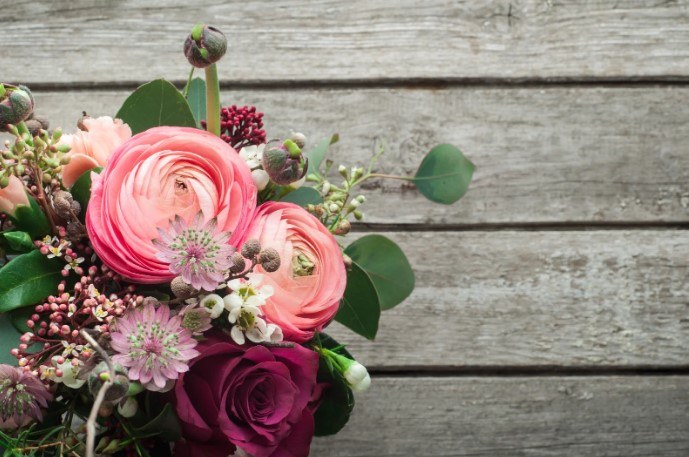
Ranunculus deserves far more attention as an Easter dinner flower. With layers of tissue-thin petals that resemble a peony or rose, ranunculus offers a luxurious look at a lower price point — typically $15–$25 for a 5-stem bunch. They last 7 to 10 days in a vase and are available in a full spectrum of spring shades, from coral and peach to champagne and deep burgundy.
They’re also an excellent conversation piece for guests who notice flowers. Most people recognize roses and tulips immediately; ranunculus invites curiosity.
Ranunculus vs. Peonies: A Common Confusion
Ranunculus and peonies are frequently confused at a glance, especially in photographs. Both feature layered, ruffled petals and a round bloom shape. The key difference: peonies in the US typically bloom from late April through June, meaning true domestic peonies are rarely available at Easter. What florists label “peonies” in March are often imported from Chile or New Zealand, which increases both cost (usually $6–$10 per stem) and environmental impact.
If the peony aesthetic is what you’re after, ranunculus is the smarter seasonal substitute. Same visual effect. A fraction of the air miles.
Eco-Friendly Approaches to Easter Flowers
Conventional cut flowers account for significant pesticide use — roses imported from Colombia or Kenya, for instance, are grown under conditions that would not meet US Environmental Protection Agency standards if produced domestically. Choosing flowers certified by Rainforest Alliance or Veriflora, or sourcing from domestic growers, meaningfully reduces that impact.
Potted flowering plants are another sustainable option. A potted Easter lily, mini orchid, or primrose gives the host something that lives beyond the dinner table. Living gifts don’t end up in a compost bin by Tuesday. At most US garden centers, small flowering potted plants start at $8 and top out around $25 for a well-grown specimen.
Practical Tips for Buying and Presenting Easter Dinner Flowers
- Buy the day before, not the morning of. This gives you time to trim stems at a 45-degree angle and let the flowers hydrate overnight, arriving at peak freshness.
- Call ahead if you’re unsure of the host’s color scheme. A 30-second text — “What’s your table going to look like?” — prevents a clash between your magenta dahlias and their dusty rose tablecloth.
- Bring a vase if you can. Most hosts are juggling a full kitchen on Easter. A bouquet that arrives ready to display — in its own vessel — is a genuinely useful gift, not just a pretty one.
- Avoid overly fragrant blooms if the host is serving food. Lilies, in particular, can overpower food aromas at the table. Save stargazer lilies for living room displays, not dining centerpieces.
- Budget guide: $15–$25 is a respectful range for a dinner guest bouquet. Under $12 risks looking like an afterthought; over $40 can feel performative unless it’s a very close relationship.
Easter Flower Seasonal Calendar
Understanding what’s available when helps narrow your choices without stress.
- Late February – early March: Forced tulips, daffodils, and hyacinths arrive in grocery stores. Quality is good; prices are slightly higher before peak season.
- Mid-March – April (peak Easter range): Full availability of tulips, ranunculus, anemones, sweet peas, and the first field-grown daffodils. Best prices and freshness of the year.
- Late April – May: Peonies begin their US domestic season. Lilac cuts appear in the North. Irises peak. If Easter falls late (April 20–25), these may be available.
Frequently Asked Questions About Easter Dinner Flowers
What are the most traditional Easter dinner flowers?
Tulips, daffodils, hyacinths, and Easter lilies are the most traditional choices. They bloom naturally in the Northern Hemisphere during the March–April window and have long been associated with spring renewal and Easter celebrations.
Are Easter lilies a good gift for Easter dinner?
Easter lilies work well as a potted plant gift but are better placed in a living room than on the dinner table. Their fragrance is strong enough to compete with food. They’re also toxic to cats, so check with the host before bringing them to a home with pets.
How much should I spend on flowers for an Easter dinner host?
A budget of $15–$25 is appropriate for most Easter dinner situations. This covers a 10–12 stem bouquet from a florist or a potted plant from a garden center. For close family, spending up to $35–$40 is reasonable.
What’s the most eco-friendly flower choice for Easter?
Locally grown or Veriflora/Rainforest Alliance certified flowers are the most sustainable options. Potted plants that can be replanted outdoors — such as primrose, mini daffodil bulbs, or hyacinths — extend the life of the gift well beyond a single dinner.
How early should I buy Easter dinner flowers?
Purchase cut flowers one day before Easter dinner. Buy potted plants 2–3 days ahead. Avoid buying more than 48 hours in advance for cut stems, as grocery store coolers don’t maintain flowers as well as professional floral coolers.
Plan Your Easter Flowers With Intention
The best Easter dinner flowers aren’t necessarily the most expensive ones — they’re the ones chosen with the host, the season, and the table in mind. A $14 bunch of locally grown tulips, trimmed and arranged in a simple glass vase, says more than a $50 imported arrangement grabbed in a rush. This Easter, check your local farmers market first, confirm what’s in season in your zone, and bring something that will still look beautiful three days after the dinner ends.